
For Research Use Only. Not for human or veterinary use.
AspirochlorineProduct ID: BLK-1600 | |
| Structure | 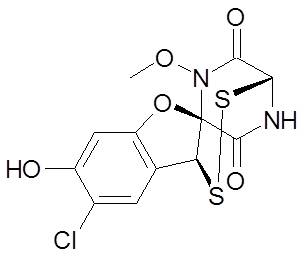 |
| CAS | 59978-04-0 |
| Molecular Formula | C12H9ClN2O5S2 |
| Molecular Weight | 360.8 |
| UN (Transport) | UN 2811 |
| Price | 1mg: USD 360.00 / 5mg: - / 25mg: - |
| Storage | -20°C |
| Solubility | 1mg/ml ethanol, methanol, DMSO |
| Purity | >95% |
| Source Organism | Aspergillus sp. |
| Summary | Aspirochlorine Aspergillus-derived epipolythiodioxopiperazine (ETP) that inhibits fungal protein synthesis and overcomes azole resistance. |
| Details | |
| Mechanism | Inhibits fungal protein synthesis via ETP-mediated disruption of translation machinery. |
| Primary Target | Eukaryotic ribosome |
| Pathway | Fungal protein translation |
| Chemical Class | Epidithiodiketopiperazine (ETP) |
| Discovery Year | 1999 |
| Keywords | epidithiodiketopiperazinefungal protein synthesis inhibitorazole-resistant antifungalcandida albicans inhibitorsulfur-containing diketopiperazinespiroaminal scaffoldfungal secondary metaboliteantifungal research tool |
| References |
|
Documents | |
| ← Back to Catalog | |